
Amazon vs Walmart: Who Wins the Conversion Battle in 2025?
By Ecomm11 Team ·
Introduction
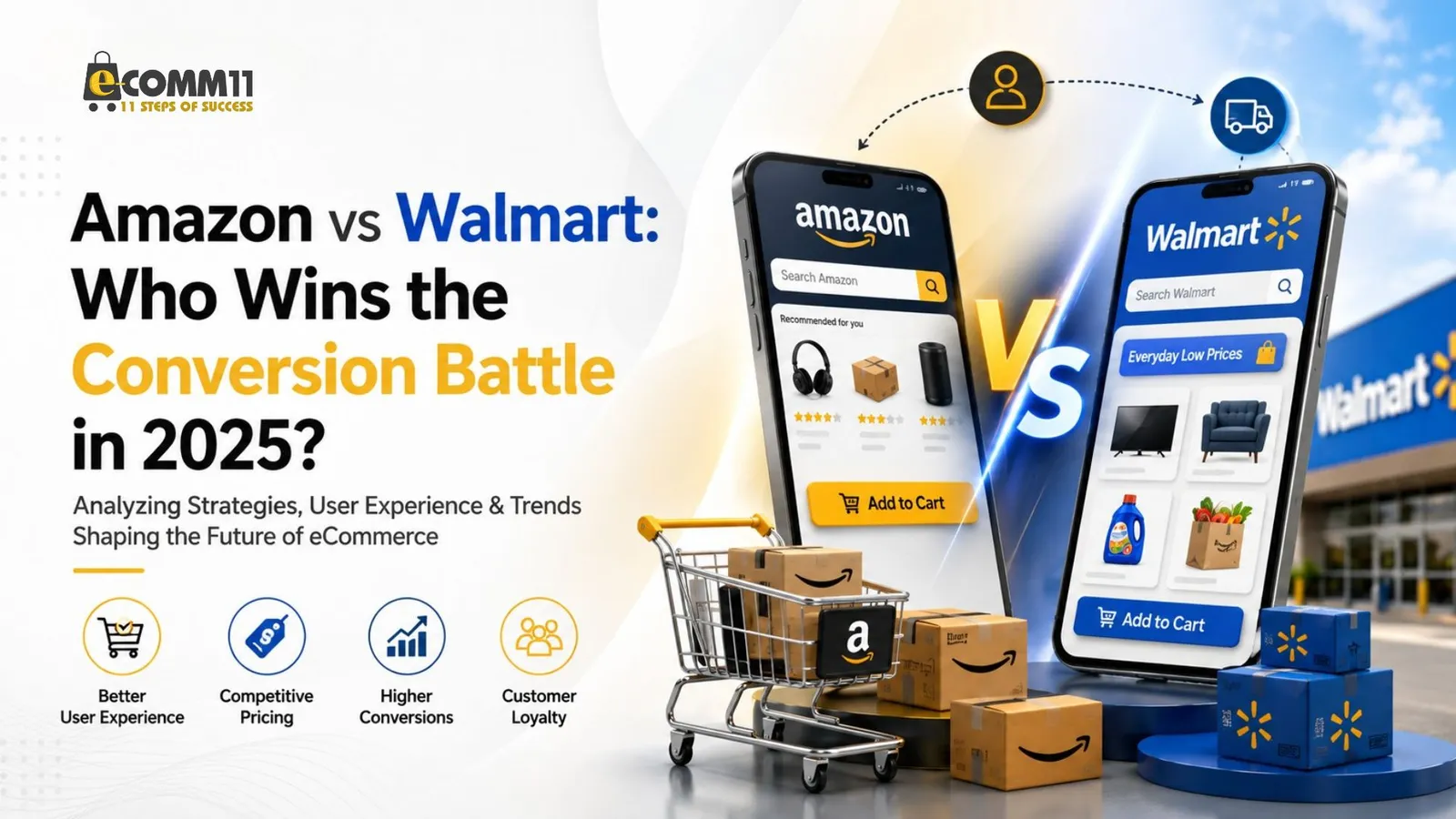
In the world of eCommerce, Amazon and Walmart are twAo giants that dominate the landscape. As we move into 2025, their battle for conversion rates and market share continues to heat up. But which platform is winning the conversion battle? In this blog, we will explore the key strategies, user experiences, and market trends that each retailer employs. Let’s dive into the details!
Understanding the Conversion Battle
Conversion rate is a critical metric for any eCommerce platform. It measures the percentage of visitors who make a purchase. With millions of users visiting both Amazon and Walmart, optimizing conversion rates is essential for maximizing sales. Here’s how both companies approach this crucial aspect:
Amazon’s Approach to Conversion
- Personalized Experience: Amazon uses advanced algorithms to recommend products based on customer behavior.
- Customer Reviews: With an extensive review system, Amazon builds trust and encourages buyers to make purchases.
- One-Click Purchase: Simplifying the checkout process, Amazon’s one-click purchasing feature reduces cart abandonment.
Walmart’s Approach to Conversion
- Everyday Low Prices: Walmart’s pricing strategy is designed to attract budget-conscious consumers.
- Omni-channel Shopping: Offering both online and in-store options, Walmart caters to various shopping preferences.
- Membership Programs: Walmart+ provides additional benefits, such as free shipping and fuel discounts, encouraging customer loyalty.
User Experience: Amazon vs. Walmart
The user experience can greatly affect conversion rates. Here is how both companies compare:
Website Layout and Navigation
Amazon’s website is often criticized for being cluttered, but its extensive product range and personalization make it easy to find products that interest users. Walmart, on the other hand, has a more straightforward layout, which some users prefer for its simplicity.
Mobile Experience
Both platforms have mobile applications that enhance the shopping experience. However, Amazon’s app often receives praise for its intuitive design and ease of use, while Walmart’s app focuses on providing budget-friendly offers and local store availability.
Trends Shaping the Future of eCommerce
As we look towards 2025, several trends will influence the eCommerce landscape:
- Social Commerce: Using social media platforms for sales, both Amazon and Walmart are investing in social selling strategies.
- Sustainability: Consumers are increasingly valuing sustainable practices; companies that prioritize eco-friendly products may see better conversions.
- Artificial Intelligence: AI is enhancing customer experiences through chatbots, recommendations, and personalized marketing strategies.
Who Wins in 2025?
As of now, both Amazon and Walmart are strong contenders in the eCommerce market, but their approaches differ significantly. While Amazon heavily focuses on personalization and trust through reviews, Walmart emphasizes low prices and omni-channel shopping experience.
Ultimately, the winner will depend on evolving consumer preferences and how each company adapts to new trends. However, one thing is certain: the competition will benefit consumers with better services and more options.
If you’re looking to optimize your own eCommerce strategy, contact us today! We can help you boost your conversions and grow your business.
Related posts
A/B Testing Strategies to Optimise Shopify Facebook Ad Campaigns
eCommerceA step-by-step approach to A/B testing Shopify Facebook ads: what to test first, fair setup in Ads Manager, creative, audience, landing page and offer tests, and how to judge results.
Common Facebook Ads Mistakes Shopify Store Owners Must Avoid
eCommerceThe Facebook ads mistakes that quietly drain Shopify budgets, why each one hurts, and the fix for every one, from tracking and optimisation events to creative fatigue and exclusions.
Google Ads Performance Max Campaigns: A Practical Guide for Shopify Sellers
eCommerceA Shopify seller's guide to Performance Max: what the campaign needs from your feed and tracking, how to structure asset groups, control brand spend, set bids and judge results honestly.