
Step-by-Step: How Sell Products On Amazon
By Ecomm11 Team ·
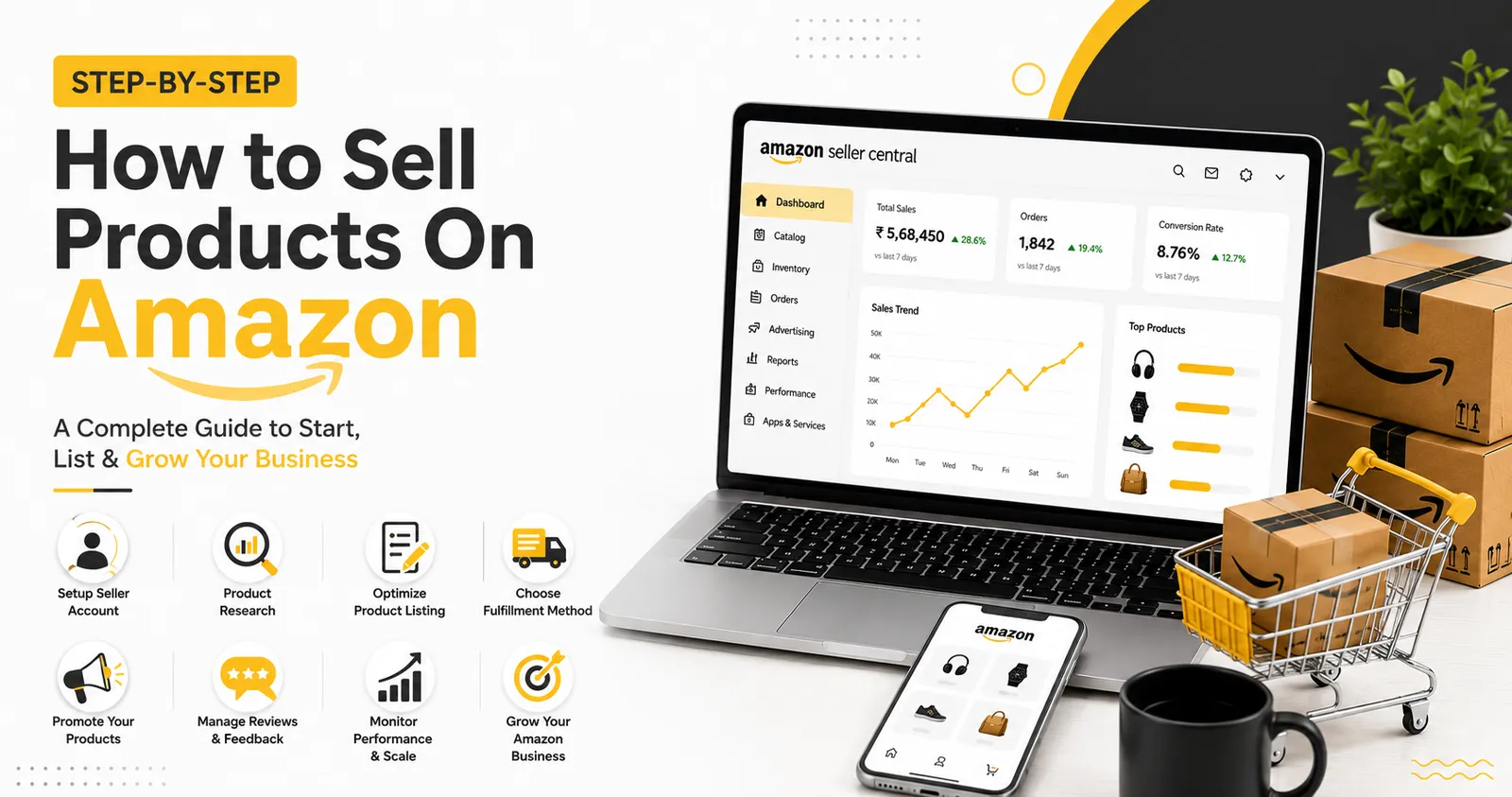
Understanding the Modern Amazon Marketplace
Amazon India continues to dominate the ecommerce industry, but the way sellers succeed on the platform has changed significantly. Today, success is not just about uploading products, it’s about creating a smooth customer experience, maintaining strong seller performance, and understanding how Amazon’s ecosystem works.
Amazon now prioritizes sellers who deliver quality listings, faster fulfillment, and excellent customer service.
Amazon Currently Prioritizes:
High conversion rates
Customer satisfaction
Fast and reliable delivery
Listing quality and relevance
With AI-driven automation and smart algorithms, Amazon helps sellers optimize pricing, advertising, and inventory management. However, increasing competition means sellers must understand rankings, visibility, and buyer behavior to stay ahead.
Sellers who align with Amazon’s ecosystem can get long-term growth and consistent sales.
Step 1: Set Up Your Amazon Seller Account
Your Amazon journey begins with creating a seller account through Amazon Seller Central. A properly configured account builds the foundation for smooth operations and future scalability.
What You Need:
Business details
Contact information
Bank account
Tax information
Choose the Right Selling Plan
Individual Plan – Best for low-volume sellers or beginners.
Professional Plan – Ideal for businesses looking to scale and sell regularly.
Amazon now follows stricter verification policies.
Verification Includes:
Identity checks
Document validation
Business authentication
Once approved, you gain access to your seller dashboard where you can manage:
Product listings
Inventory
Orders
Account performance
A properly set-up seller account helps avoid compliance issues and operational delays.
Step 2: Conduct Smart Product Research
Product selection is one of the biggest factors behind Amazon success.
Rather than guessing, successful sellers use research and data to identify products with strong demand and profitable opportunities.
What to Look For:
Consistent demand
Moderate competition
Healthy profit margins
Long-term selling potential
Popular Product Research Tools:
Jungle Scout
Helium 10
Key Factors to Consider:
Shipping and storage costs
Return rates
Competitor pricing
Customer pain points
Niche products with a clear value proposition often outperform highly saturated markets.
Smart product research reduces risk and improves profitability.
Step 3: Create an Optimized Product Listing
Your product listing acts as your digital storefront, and optimization directly impacts visibility and conversions.
Amazon’s algorithm rewards listings that are informative, relevant, and customer-focused.
Key Listing Elements
1. Product Title
Your title should be:
Clear
Keyword-rich
Easy to understand
Relevant to search intent
2. Product Images
Images heavily influence buying decisions.
Best Practices:
High-quality visuals
Lifestyle images
Infographic images
Multiple product angles
3. Bullet Points
Bullet points should:
Highlight key benefits
Solve customer problems
Explain features clearly
4. Product Description
Descriptions should be:
Persuasive
Detailed
Mobile-friendly
Customer-focused
5. Backend Keywords
Backend keywords improve discoverability without cluttering visible content.
A well-optimized listing increases both traffic and conversion rates.
Step 4: Choose the Right Fulfillment Method
Fulfillment directly impacts customer experience, delivery speed, and seller ratings.
Amazon offers two major fulfillment models.
Fulfillment by Amazon (FBA)
With FBA:
Amazon stores products
Handles packing and shipping
Provides customer support
Gives access to Prime customers
Fulfillment by Merchant (FBM)
With FBM:
You manage logistics
Greater operational control
Flexible shipping processes
Things to Consider:
Storage fees
Shipping costs
Delivery timelines
Business capacity
Amazon favors sellers who consistently meet delivery expectations.
Step 5: Promote Your Products Effectively
Launching a product is only the beginning. Visibility is what drives sales.
Amazon offers powerful advertising solutions to help sellers increase reach and generate demand.
Amazon Advertising Options
Sponsored Products
Appear directly in Amazon search results.
Sponsored Brands
Promote multiple products while building brand visibility.
Advertising Best Practices
Target relevant keywords
Optimize bids regularly
Track campaign performance
Monitor ROI
Drive External Traffic
Successful sellers also use:
Social media marketing
Email campaigns
Influencer collaborations
Content marketing
Combining internal and external traffic sources improves both visibility and conversions.
Step 6: Manage Customer Reviews and Feedback
Customer reviews strongly influence purchase decisions and product rankings.
Positive experiences help build trust, while unresolved issues can negatively affect visibility.
What You Should Do
Use Amazon’s review request feature
Respond to customer feedback
Address complaints quickly
Improve based on reviews
Why Reviews Matter
Higher conversions
Improved search visibility
Better brand credibility
Product improvement insights
Strong customer relationships lead to repeat purchases and long-term trust.
Step 7: Monitor Performance and Scale Your Business
Selling on Amazon is an ongoing process that requires constant optimization and analysis.
Successful sellers track performance regularly and adjust strategies based on data.
Key Metrics to Track
Sales performance
Traffic and conversion rates
Advertising results
Customer feedback
Inventory health
Growth Strategies
Expand product range
Optimize listings regularly
Increase advertising strategically
Explore new marketplaces
Inventory Management
Avoid stockouts
Maintain supply consistency
Forecast demand
Data-driven decisions are the key to sustainable growth.
What to do next
Selling on Amazon India offers enormous growth opportunities, but success requires strategy, consistency, and adaptability.
From account setup and product research to listing optimization and advertising, every step plays an important role in your growth journey.
Focus On:
Product quality
Customer experience
Operational efficiency
Continuous optimization
Competition on Amazon is intense, but the opportunities are equally powerful. Sellers who stay updated, optimize consistently, and prioritize customer satisfaction are far more likely to build profitable and scalable businesses.
Success on Amazon is not about shortcuts, it’s about building a smart, customer-focused selling strategy.
Related posts
A/B Testing Strategies to Optimise Shopify Facebook Ad Campaigns
eCommerceA step-by-step approach to A/B testing Shopify Facebook ads: what to test first, fair setup in Ads Manager, creative, audience, landing page and offer tests, and how to judge results.
Common Facebook Ads Mistakes Shopify Store Owners Must Avoid
eCommerceThe Facebook ads mistakes that quietly drain Shopify budgets, why each one hurts, and the fix for every one, from tracking and optimisation events to creative fatigue and exclusions.
Google Ads Performance Max Campaigns: A Practical Guide for Shopify Sellers
eCommerceA Shopify seller's guide to Performance Max: what the campaign needs from your feed and tracking, how to structure asset groups, control brand spend, set bids and judge results honestly.